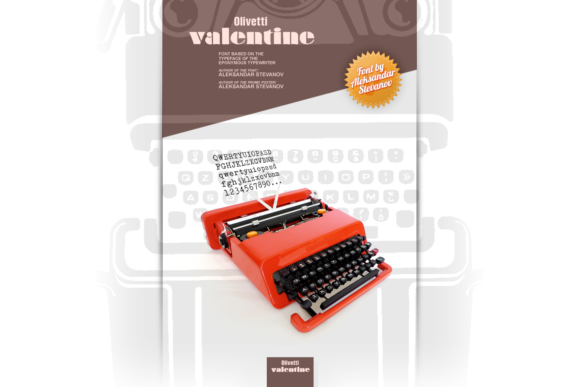
The Olivetti Valentine: A Design Icon That Redefined the Typewriter
There are tools, and then there are cultural artifacts. The Olivetti Valentine belongs squarely in the second category. Designed by the legendary Ettore Sottsass and launched in 1969, this portable typewriter is one of the most recognizable objects of the twentieth century. But beyond its striking pop-red shell, the Valentine was a radical rethinking of what a writing machine could be: personal, portable, and emotionally engaging. Whether you are a design enthusiast, a writer, a collector, or simply someone who appreciates objects with soul, understanding the Valentine offers a rare window into an era when function and joy were not considered opposites.
This article explores the Valentine’s origins, its defining characteristics, the experience of using one today, and how to decide if this iconic typewriter belongs in your workspace or collection. No nostalgia for nostalgia’s sake—only a clear-eyed look at what makes this red machine matter.
The Birth of a Radical Idea
In the late 1960s, Olivetti was already a respected name in office equipment. But with the Valentine, the company took a deliberate step away from the grey, utilitarian machines that dominated desks. Ettore Sottsass, together with Perry King and Albert Leclerc, set out to create a typewriter that was not merely portable but companionable. The name itself—Valentine—was chosen to evoke affection. This was a machine you were meant to love, not just operate.
The design process was as unconventional as the result. Early prototypes used bright colors and unconventional materials, including ABS plastic, which was still relatively new in consumer products. The final choice of bright red was deliberate: it signaled energy, creativity, and approachability. The shape, with its rounded edges, integrated carrying handle, and flat profile, made the Valentine look less like office equipment and more like a futuristic accessory.
When it launched in 1969, the Valentine was an immediate sensation in design circles. It won the Compasso d’Oro award in 1970 and has since been exhibited at the Museum of Modern Art in New York and the Triennale Design Museum in Milan. But its real legacy is not in museums—it’s in the hands of writers, poets, and creators who continue to find inspiration in its tactile, unfussy presence.
What the Olivetti Valentine Actually Is
At its core, the Olivetti Valentine is a manual portable typewriter. It features a standard QWERTY keyboard, a four-row carriage, and a platen that accommodates letter- or A4-sized paper. It weighs around 3.8 kilograms (about 8.4 pounds)—light enough to carry but substantial enough to feel sturdy. The carrying case, which doubles as a base, is made of the same red ABS plastic, and the machine clips securely into it for transport.
Several key features set the Valentine apart from its contemporaries:
- Integrated carrying handle – The handle is part of the body itself, not an add-on. This design choice eliminated the need for a separate case and made the typewriter feel like a single, self-contained object.
- Flat, low profile – Unlike boxy office typewriters, the Valentine has a sleek, almost slab-like shape that sits low on a desk. This makes it comfortable to use and easy to store.
- Bright red ABS plastic body – The material is durable, lightweight, and resistant to dents. It also gives the machine a uniform, seamless appearance.
- Simple, clean keyboard – The keys are round, white, and spaced evenly, with a satisfying tactile feedback that manual typewriter enthusiasts prize.
- Two-color ribbon mechanism – Users can switch between red and black ink ribbons, adding a creative touch to correspondence or drafts.
Later versions, including the Valentine Junior and Valentine Deluxe, introduced minor variations, but the core design remained largely unchanged. It is worth noting that the Valentine is a purely mechanical device: no electricity, no electronics, no digital components. This is both its charm and its limitation.
Who Benefits from Using an Olivetti Valentine?
The Valentine is not for everyone. But for specific audiences, it offers genuine value that no modern device can replicate.
Writers and Creatives Seeking Distraction-Free Workflow
In an age of notifications, multitasking, and screen fatigue, many writers turn to manual typewriters as a way to reclaim focus. The Valentine forces you to commit to each keystroke. There is no undo, no spellcheck, no backspace that erases. This constraint can be liberating for first drafts, journaling, or poetry. The tactile sound and feel of the keys create a rhythm that many find meditative. Several contemporary authors have publicly praised the Valentine for helping them break through creative blocks.
Design and Object Enthusiasts
If you appreciate industrial design, the Valentine is a touchstone. Owning one is different from merely reading about it. The way light plays across its curved red shell, the precision of its key action, the ingenuity of its integrated handle—these are details that reveal themselves only through use. For collectors, the Valentine is often the centerpiece of a desk or display. It also serves as a conversation starter, prompting discussions about design philosophy, material innovation, and the cultural context of the 1960s.
Business Owners and Creators with a Brand Aesthetic
A Valentine on a reception desk, in a creative studio, or in a co-working space communicates values: originality, thoughtfulness, and a willingness to invest in quality. For businesses built around design, writing, or vintage aesthetics, the Valentine acts as a silent ambassador. It suggests that the people behind the brand care about how things look and feel—not just what they do.
Teachers and Students of Design History
For educators and students, the Valentine is a perfect case study in form and function. It exemplifies how industrial design can elevate a mundane object into an icon. It also illustrates the transition from metal-and-paint construction to injection-molded plastics in consumer goods. Having a real Valentine to examine, touch, and type on provides a learning experience far richer than any textbook image.
Strengths and Considerations: What to Expect
Before acquiring a Valentine, it helps to set realistic expectations. Here are the most important strengths and limitations to consider.
Strengths
- Exceptional design – The Valentine is genuinely beautiful. It enhances any space it occupies.
- Portable – At under 4 kg, it is easy to move from desk to desk, or even to take to a café or library.
- Durable – ABS plastic is tough, and the internal mechanism is straightforward to repair. Many Valentines from the 1970s still work perfectly.
- Pleasant typing experience – The keyboard offers crisp, consistent feedback. The keys require a deliberate touch but are not fatiguing.
- Creative constraint – The lack of digital features can help you focus and write more intentionally.
Limitations and Practical Considerations
- No digital output – What you type stays on paper. If you need a digital copy, you will have to scan or retype. For some workflows, this is a non-starter.
- Maintenance required – As a vintage mechanical device, the Valentine may need cleaning, lubrication, or replacement of parts like the platen roller, rubber grommets, or ribbon spools. A well-maintained unit is reliable, but neglect can make it temperamental.
- Not ideal for heavy-duty typing – The Valentine is a portable, not a heavy-duty office machine. Typing hundreds of pages per week may push its limits over time.
- Cost – A fully restored Valentine can cost between $400 and $800, depending on condition and provenance. Original examples in excellent condition command higher prices. This is a considered purchase, not an impulse buy.
- Availability of consumables – Standard typewriter ribbons are widely available, but the two-color spools used by the Valentine are less common. You may need to adapt modern ribbons or seek specialty sellers.
Real-World Scenarios and Applications
To help you imagine the Valentine in your own life, here are a few typical use cases.
- The morning pages ritual. A novelist wakes early, pours coffee, and types three pages of stream-of-consciousness writing on her Valentine. The lack of a screen means no temptation to check email or social media. The clatter of keys becomes a signal to the brain: this is creative time.
- The boutique hotel lobby. A small design hotel places a Valentine on a writing desk in the lobby. Guests use it to write postcards, leave notes, or simply enjoy a tactile break from their devices. The staff reports that the typewriter is photographed more than any piece of furniture in the building.
- The graphic designer’s studio. A freelance designer keeps a Valentine on a side table. She uses it to draft short copy, jot ideas, or write thank-you notes to clients. Its red shell complements the studio’s mid-century modern aesthetic and reminds visitors that the studio values craft and personality.
- The classroom demonstration. A high school design teacher brings her Valentine to class during a unit on 20th-century industrial design. Students take turns typing their names and feel the mechanical action. The lesson on Sottsass and the Italian design movement becomes tangible.
How to Evaluate Suitability for Your Needs
If you are considering acquiring an Olivetti Valentine, ask yourself the following questions to determine if it is right for you.
- What is your primary use? If you need a reliable typing tool for regular correspondence, journaling, or creative drafts, the Valentine is excellent. If you need to produce long manuscripts or share digital text, it may be less practical.
- Are you comfortable with maintenance? Vintage typewriters are not set-and-forget devices. You should plan to learn basic cleaning and adjustment, or budget for occasional professional servicing.
- Do you value design as much as function? If the Valentine’s appearance and cultural significance matter to you, its price tag will feel justified. If you only care about functionality, a newer or less expensive portable may serve you as well.
- Do you have space? The Valentine is compact by typewriter standards, but it still requires desktop real estate and a flat surface for stable typing. It also needs to be stored in a dry, dust-free environment.
- Are you willing to buy restored? Unless you have experience with mechanical repairs, it is wise to purchase a Valentine that has been professionally serviced. This ensures the platen, keys, and carriage are all functioning correctly and that the typeface is crisp.
Conclusion: More Than a Machine
The Olivetti Valentine is not the most efficient, cheap, or versatile typewriter ever made. But that is not the point. It is a reminder that tools can also be talismans—objects that inspire us to do better work and to enjoy the process along the way. Its bright red shell contains a mechanical heart that has been beating for over five decades, and for many, its pulse remains irresistible.
Whether you are a writer seeking focus, a collector curating a meaningful workspace, or simply someone who believes that how things look matters, the Valentine offers an experience that no app or laptop can replicate. It invites you to slow down, commit your thoughts to paper, and remember that creating something—even a simple sentence—can be a pleasure. And in a world that moves faster every year, that is no small thing.
For further reading on the design history of the Valentine, consider exploring the Compasso d’Oro archive or the Olivetti historical collection in Ivrea, Italy. Many online communities also exist where owners share maintenance tips, ribbon sources, and stories about their own Valentines. If you decide to join their ranks, you will be acquiring far more than a typewriter—you will be inheriting a piece of design philosophy.